

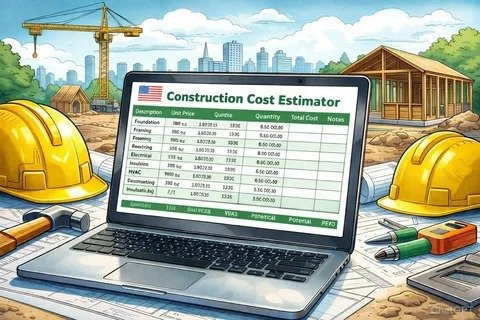
The construction industry is under constant pressure from companies to offer competitive bids with realistic project budgets. Precise estimates can have a significant impact on pricing, project planning and financial results. The slightest of the errors in calculations can impact a contractor’s odds of landing lucrative projects. Hence, the estimator has to consider quantities of materials used, labour, equipment cost and other costs. An effective estimating process establishes a solid basis for preparing competitive construction bids.
Digital platforms centralizes material quantities, labor calculations, equipment cost and pricing. Construction estimating software is a tool for contractors that offers a systematic method for organizing project costs and creating accurate estimates. As a result, contractors can look at monetary aspects before doing a price quote. These tools also provide uniform and chronological estimating records that can be reviewed by construction professionals to inform them during the bidding process so they can make informed decisions on the cost of their projects.
Understanding the Connection Between Construction Estimating and Competitive Bidding
Construction estimating and competitive bidding are directly related. Before determining the price for a project, contractors need to know what the project needs. They analyze drawings, specifications, material quantities, labour and other costs. The estimated project cost is derived from each of the elements. So accurate calculations provide the basis for a realistic bid.
It also involves competitive bidding and contractors having to know their market position. Even a very high estimate can negatively impact a person’s probability of getting a contract. But the price is rather low, which can cause financial problems during the execution phase. Contractors need to take into account all the costs associated with running the business, the projected profit and risks of the project. Digital estimating solutions package these details and make a more precise visualisation of forecasted expenses. This way, businesses can make informed pricing decisions.
Key Elements That Shape a Construction Bid
There are a number of cost elements that go into a construction bid, and they make up the total cost of a bid. The contractors need to carefully consider each of the components before making an offer. The lack of expenses may lead to budget shortfalls and impact profit. Usually these factors have an impact on construction bids:
- Material quantities and pricing: Contractors make calculations regarding materials needed and current prices from suppliers. They also take into account the need for transportation, storage and any potential material waste.
- Labor costs: Labor estimates are affected by wage rates, size of the workforce, working hours, and type of specialists. The contractors need to take into account the local employment situation when working out these costs.
- Equipment expenses: Project budgets include the cost of machinery hiring, fuel, maintenance fees and operating costs. The types of equipment needed can differ from one construction operation to the next.
- Subcontractor quotations and overhead: The contractors examine the specialist service quotations in conjunction with administrative and operational costs. The total cost of the project is affected by these costs.
- Contingency allowances and profit margins: Additional costs can be incurred by unexpected conditions. Contractors take care of risk and still make a profit.
Common Estimation Challenges During the Bidding Process
Construction estimators are often faced with challenges of limited information and tight deadlines. This may make it difficult to calculate costs. Even experienced professionals can have differences, as documents of their project have unclear specifications. Thus, contractors need to be aware of some of the typical estimating issues that need to be addressed before the bid is complete.
An accurate calculation of quantity is still a huge worry. Large projects can have large differences as a result of small measurement errors. The cost of materials can also impact estimates, especially if suppliers make regular updates. Also, drawings that are incomplete can result in unclear requirements for the project. Another problem is that there are tight submission deadlines, and estimators don’t have enough time to review calculations. A well-defined estimating process can minimize confusion and provide more transparency around project costs.
How Construction Estimating Software Shapes Bid Preparation
Contractors can create project estimates with a controlled environment on digital estimating platforms. They introduce concentrations, pricing and cost calculations into a single workflow. This means that estimators can look at various expense categories without having to use a multitude of disconnected spreadsheets and manual record-keeping.
Construction estimating software also provides a uniform process to analyze the project data. Materials, labour, equipment and subcontractor costs can be arranged in the material, labour, equipment and subcontractor sections of individual estimates. This will allow cost comparison to be made for the bidding process. In addition, digital records serve as a reference to review previous calculations and look for discrepancies. These documents are valuable for contractors to review in determining the scope of work and in developing formal proposals.
Digital Quantity Takeoffs and Material Calculations
Quantities are the materials needed for a construction job. Architectural drawings, structural plans, and technical specifications are analysed by estimators. They determine quantities of concrete, flooring, roofing, walls, etc., for the construction industry. Correct amounts are essential for determining material costs.
Digital takeoff software enables the measurement of drawings electronically. Users can use the platform to compute lengths, areas, counts, and volumes depending on the platform. They can then organize these measurements according to project categories. This helps to establish a better relationship between blueprint data and approximate material expenses.
Still, it will require someone to be diligent and precise in drawing and reviewing to ensure accuracy. Estimators have to verify measurement units and consider project specifications. They will also have to take into account material waste and installation specifications. These are for consistency purposes to ensure the quantities are in alignment with actual construction requirements.
Labor, Equipment, and Subcontractor Cost Assessment
The cost of materials is just one of the components in a construction estimate. Labor, equipment and specialist services are also significant elements of the project costs. These categories should be assessed appropriately for the type of project and anticipated timeline by the contractor.
Labor calculations include the number of workers, the labor wage rate, productivity assumptions, and working conditions. Equipment estimates cover the cost of the rental, fuel usage, transportation and maintenance. In the meantime, the people who supply the subcontractor quotations will give information on the prices of the specific activities. These are reviewed by contractors before they can be added to estimates to compare against project specifications.
These calculations can easily be checked if they are organized in cost records. Estimators are able to break down costs and analyze how they make up the total budget. Furthermore, clear documentation enables a valuable reference when having discussions with project managers and subcontractors. The process ensures uniformity of bid calculations throughout various stages of the project.
Factors That Determine the Accuracy and Competitiveness of Construction Bids
An attractive final price is not the only criterion for a competitive bid. The contractors need to be familiar with the real requirements of the project and realistically estimate costs. The estimate is done with reliable estimates for materials, labor, equipment, overhead costs and potential project risks. If done incorrectly, these details can be overlooked by estimators, and the suggested price may not be in line with the financial needs of the project.
The quality of the information is also a factor affecting construction cost estimating. Accurate drawings, up-to-date supplier quotations and realistic labor assumptions help in making reliable calculations. Regional market conditions also are important. The availability of and costs associated with material may differ from location to location. Contractors should, therefore, check on the price conditions of the area before finalizing their bids.
Profit margins are also one of the important factors to take into consideration. Commercially reasonable prices are a necessary component, with businesses needing to pay for operating costs. Awarding a contract on a very aggressive basis can put a financial strain after the award. This is why it is crucial for contractors to assess how competitive the proposal is and also how financially sustainable it is when creating their proposals.
Material Price Fluctuations and Project Cost Forecasting
The prices of construction materials may vary during the year. The market prices of steel, cement, lumber, electrical and finishing products may vary. These fluctuations can impact estimates, particularly if the contractor makes one several weeks before the job is bid on.
Seeing suppliers’ quotes is also a good reference for what prices they’re currently offering. Contractors should note when they are receiving quotes and the time period that the quotes are valid. They should also take into account the variability of the transport systems and materials that are available in the region. In longer projects, the estimators will be able to consider future price changes for future costs.
The situation in the region is of special concern. For instance, the cost of materials may be affected in out-of-the-way construction sites because of transportation distances. This may also depend on the availability of local suppliers. If contractors are aware of these, they can come up with more accurate financial projections.
Reviewing Estimates Before Bid Submission
Care needs to be taken before a final estimate is submitted. Contractors should check calculations, quantities, pricing assumptions and specifications on the project. This can show up missing costs or inconsistencies, which can have an impact on the proposed contract price.
There are also historical project records which will be useful for comparison. Previously used materials, labor and equipment costs can be reviewed by estimators. But they have to recognize the variation of scope of the project and the market. Previous estimates must be used as a guide and not as a template for pricing.
The following should be part of the thorough review:
- Check materials for accurate amounts with most up-to-date project drawings.
- Review labor rates and assumptions of workforce.
- Ensure that equipment and subcontract costing is substantiated.
- Check the overheads, contingency and profit calculations.
- Find and add missing data and inconsistent pricing entries.
The checks provide a more secure basis for bidding from contractors. They also create a more robust record for their internal approval and client discussion.
Building a More Structured Bidding Process with Construction Estimating Software
A uniform (standard) estimating process helps ensure transparency throughout construction operations. To come up with a professional proposal and to determine the costs of a project, contractors should have organized records. Digital platforms offer a single place to view and work on estimates and to review individual cost categories.
Construction estimating software can also help to ensure uniformity in estimating staff. Project information is shared so that estimators and managers can refer to it during the bid preparation process. They are able to review quantities, cost assumptions and expense analyses in an organized workflow. It helps to eliminate confusion if several professionals are involved in one proposal.
Careful consideration must also be given to the technology to be selected. The size of their projects, needs for estimates, and processes vary among contractors. Straightforward takeoffs and cost tracking may be a residential contractor’s focus. While commercial contractors might need more in-depth reporting and intricate costs, these are not the only things that are different. There are other differences, too, between commercial contractors and the usual contractor. Rather, it’s important that businesses assess the platforms based on their real estimating requirements.
Essential Features Contractors Should Evaluate
Contractors need to consider the software before they select an estimating platform. The demands of the features being built will also rely on the complexity of the project and business operations. A useful platform would simply complement the company’s already established estimating process and not add to the complications.
Some features need to be considered when testing software:
- Digital takeoff capabilities: Measurement tools enable estimators to quantify, based on the digital construction drawings.
- Cost databases and pricing management: Costs for materials, labor and equipment are organized to have a reference.
- Estimate customization: Flexible templates support various categories of projects as well as the various price levels of projects.
- Reporting and bid documentation: Clear reports provide all costs and estimated costs in an easy-to-read format.
- Data organization and collaboration: Centralized records provide a uniform reference for professionals who work on estimates and project management.
Usability, integration and data management should be considered by contractors as well. When multiple staff are using the platform, the training needs come into play. In addition, it’s important for businesses to audit their customer support and available documentation. These factors offer one way to evaluate various estimating solutions.
Choosing Estimating Tools for Different Construction Projects
The requirements of projects are quite different in construction. Thus, the contractor should choose estimating tools based on activities of the contractor’s business. Small houses may not be suitable for the needs of big buildings.
If a contractor is weighing the possibility of a residential project, he or she is likely to come up with a more conservative estimate. They perform calculations for foundations, framing, roofing, plumbing, electrical and interior finishes. Many of their estimating requirements can be fulfilled with straightforward quantity takeoffs and organized cost records. For small businesses, cost and user-friendliness could be other critical factors.
There are more complicated plans and costs in commercial construction. Multi subcontractors, special equipment, detailed specifications and greater quantities of materials may be involved in projects. If you’re a contractor, you may require detailed and organized records. They should consider platforms that are able to cater for these needs.
Small contractors need to make sure to take into account their workload, staffing and the average project value. In larger companies, it may be even more important to work together and report costs in detail. In either instance, the accurate business requirements ought to be mirrored on the right estimating platform. When contractors are evaluating available workflows to estimate projects and project management tools, solutions such as Constil should be taken into consideration.
Conclusion
Competitive contractor bidding relies on correct calculations, reasonable pricing and information about the project. Before offering bids, contractors need to consider the amount of materials and manpower needed, equipment costs, and market conditions. This provides more transparency in these cost categories when using a structured estimating process. Construction Estimating Software offers a digital platform for arranging job estimates and examining financial specifics. There will be a need for professional judgement at all stages, however. Reliable data and cost assessment by contractors can help them to make informed bids. Finally, a consistent method of estimating helps to make financially-sound decisions and improve a construction business’s operations.
FAQs
How Does Construction Estimating Software Work?
It coordinates the quantities of materials, the costs of labour, the costs of equipment, and the costs of the project. This information helps the contractors to make structured estimates and proposals.
Why Is Accurate Cost Estimation Important For Contractor Bidding?
The correct calculations enable contractors to set realistic project costs and profit margins. They also minimize the cost of failure and unforeseen expenses in construction.
Can Small Contractors Use Construction Estimating Software?
Yes, small contractors can leverage digital estimating for residential and commercial construction projects. They should choose platforms depending on the project requirements and budget.
What are the features that contractors expect from estimating software?
Key attributes include digital takeoffs, cost databases, customizable estimates and reporting. During the bid preparation phase, collaboration and well-maintained project records are also of importance.